
Fuel Protests Disrupt Ireland as Government Seeks Resolution
Protests over high fuel prices have led to fuel shortages and travel disruptions in Ireland, with government talks ongoing.
Key Facts
- —Protests in Ireland over high fuel prices have led to fuel shortages.
- —Up to 500 service stations could be without fuel by Friday night.
- —Protests are linked to the US and Israeli conflict with Iran.
- —Government talks are ongoing to resolve the crisis.
- —Emergency services face fuel supply pressures.
- —The Irish army is on standby to disperse protests if needed.
- —Similar protests have spread to Norway.
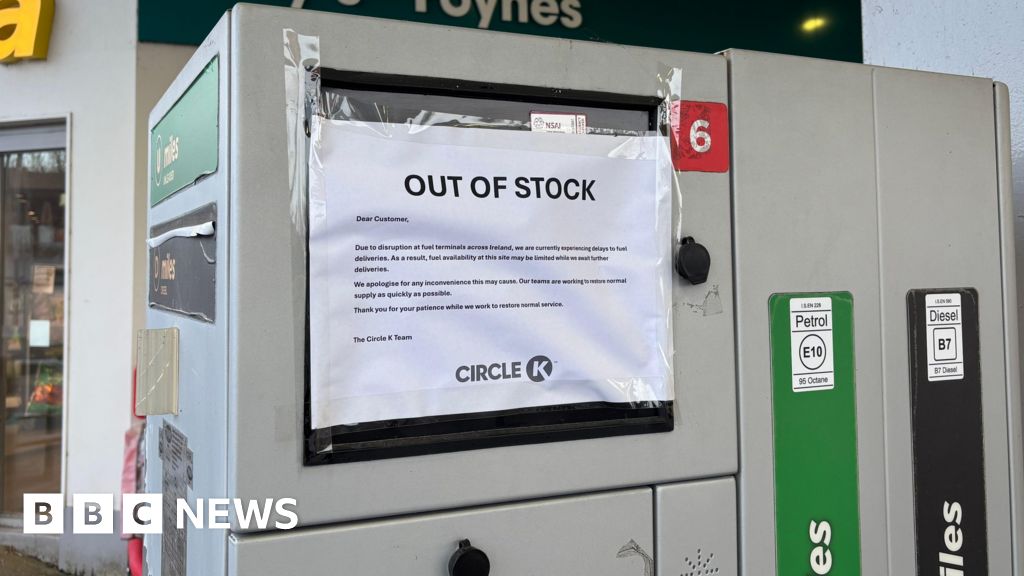
Protests against high fuel prices have caused significant disruptions across Ireland, with the number of service stations without fuel expected to rise sharply. The CEO of Fuels for Ireland, Kevin McPartlan, warned that up to 500 garage forecourts could be without fuel by Friday night if blockades persist. As of Friday, over 100 stations in Dublin were already out of fuel.
The protests, which have entered their fourth day, are in response to high fuel prices attributed to the ongoing conflict involving the US, Israel, and Iran. Demonstrators have used slow-moving convoys to block roads, including major routes like the M1 and M50, causing significant travel disruptions. Ports, fuel depots, and the only fuel refinery in Cork have also been targeted.
Irish government officials have been in discussions with representative bodies to address the situation. Taoiseach Micheál Martin expressed concern over the potential need to turn away oil deliveries due to the blockades. "It's unconscionable, it's illogical," Martin told RTÉ. The government has placed the army on standby to disperse protests if necessary, and police have warned that those who do not comply with orders could face arrest.
The blockades have also impacted emergency services, with the National Emergency Coordination Group noting that fuel supplies for emergency vehicles are under "increasing pressure." "These vehicles rely on retail fuel forecourts for their fuel supply through the use of fuel cards," the group stated.
In response to the crisis, some service stations have implemented measures to manage limited supplies. Raceside Service Station in County Tipperary ran out of fuel within seven hours, and a second supply was delivered with a €30 cap for customers. However, station owner Burke expressed concerns about running out of fuel again before the next delivery on Monday.
The protests have sparked political tensions, with Sinn Féin leader Mary Lou McDonald criticizing the government's handling of the situation. "What on earth are Fianna Fáil and Fine Gael doing locking the protesters out of the talks," McDonald said, accusing the government of "making an absolute shambles of things" and "escalating" the crisis.
Kildare farmer John Dallon, a protester, indicated that the demonstrations could continue for weeks if necessary. "Maybe for another week, maybe two weeks. If it takes a month, we are prepared to sit here," Dallon stated.
The protests have also had international echoes, with similar demonstrations occurring in Norway, where truck drivers have organized under the banner "diesel roar" in Oslo. Meanwhile, global oil prices have seen a slight decrease, with Brent crude priced at $96.99 a barrel on Friday, down from earlier in the week but still significantly higher than before the conflict in Iran began.
As the situation develops, the Irish government continues to engage in talks, though no further support measures will be announced until the blockades end.